Tuesday, November 6, 2012

RESILIENT RELATIONSHIPS

How do we cope with change ?

Probably, you and I haven´t heard the word ¨resilience¨ until a few years ago, when it was introduced to us as a psychological definition.  The meaning of the words ¨resilience¨ and ¨stress¨ were originated in the physics field to express whether an object is submitted to a deforming pressure (stress) and the capacity to recover to the original state/shape (resilience). 

Paradoxically, these two words have also been widespread in the corporate world.  There is only one big visible difference to me.  When dealing with any given situation where we cope with change or face adversity, we tend to come out stronger and transformed (instead of returning to a ¨original state¨).

So, we can say resilience is the capacity to stand up against adversity or, as said before, the ability to cope with change and overcome it.  Some gurus may say we don´t need to be only resilient but to produce the change.  I cannot agree more!
We are currently living in a non-stop fast paced world and the word ¨resilience¨ appears as an answer to cope with change. 

The definition also reminds me Heraclitus famous statement: ¨The only thing that is constant is change¨.
 
 
A highly valued emotional competence.

Across lifetime everyone has faced up and downs but history taught us that the species who adapted to new environments have survived.
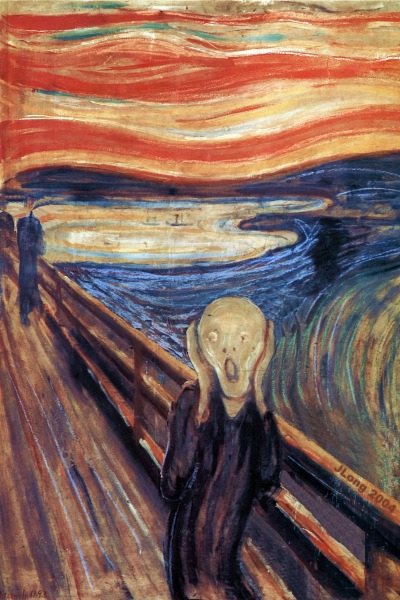
 
Nowadays, being resilient is as important as any of your other competencies, in order to face the ¨True North¨.  We have to remember that some days the sun will shine brighter than others and it will be up to you to turn this light on our favor.

As mentioned at the beginning of the blog, the idea of sharing organizational development information has a clear goal: to apply this knowledge in our daily lives and build stronger and better relationships.  Being resilient can be a skill, an attitude or a way of life!

As social animals as we are called, we tend to build multiple relationship throughout our lives.  When committing to a partner, we are building resilient relationships.  As couples we grow, change and develop; therefore, each other’s adaptability plays a huge role in the future of the relationship.

One of the best quotes I have ever heard was at my brother´s wedding day while someone was videotaping the family wishes.  It was the uncle´s bride turn to make a wish and he made up a simple quote I will never forget.  He said something like this:  ¨Remember there will always be up and downs in your relationship.  It is very important for you to remain together and knowledge that some fights are not worth to fight.  Love each other and enjoy the journey while you strive for happiness¨.

 
How do we build resilient relationships?

As resilient partners, we will not only cope well with unusual strains and stressors but actually will experience such challenges as learning and development opportunities.  This central process involves tools, tips and quotes to train and develop our adaptive coping skills.

As a guide, I put together these 6 steps I consider a powerful resource for building resilient relationships:


1. ACCEPTANCE
 
- Accept what cannot be changed in life: adversity, trauma, tragedy, threats, etc. First admit yours in order to accept others. ¨The wind cannot be prevented, but you can build mills¨. Dutch Proverb.

- Digest the idea that good and bad things happen in life.
 
- Relieve emotions by not blaming yourself or your partner.  Get rid of excuses and face inconveniences as opportunities to change. Stay away from blame or victimism, as you both are responsible for creating a new future. ¨If you want to change the world, first change yourself¨ by Mahatma Gandhi.
 
2. CURRENT REALITY

- Once acceptance stage has been assimilated, you both need to analyze your current reality. Involve your partner in order to reach consensus and get to a clearer conclusion.
 
- What brought the couple to this point won´t get them to the next level. What needs to be changed? Neurophysiologists ensure that the human brain is malleable and flexible enough to abandon wrong behaviors and learn new ways of thinking, feeling and doing by reorganizing neural circuits governing ideas, emotions, and feelings, and thus the ability to adapt.
 
- Ask each other questions that help you move forward. See yourself and your partner as potentials of what you both could be.
 
3. ELIMINATE OBSTACLES

- Transform obstacles in new challenges.  “The one thing you can’t take away from me is the way I choose to respond to what you do to me. The last of one’s freedoms is to choose one’s attitude in any given circumstance” by Viktor E. Frankl.
 
- Avoid procrastination.  Put first things first.

4. LOOK FOR NEW OPTIONS
   
- Envision the couple in a few months or years from now! This is a very powerful tool that can get you to an ideal situation. As a proverb in the Talmud states: ¨We do not tend to see things as they are but as we are¨.
 
- Build your own SWOT analysis and share it with your partner.  Ask your partner for a constructive feedback. 
 
- Create together an action plan with different options.  Allow yourselves to think out of the box when defining common goals.   Reach consensus!
 
- Make the move from vision to action.
 
5. SERENDIPITY
 
- Keep a positive behavior and allow yourselves to express feelings with each other.
 
- Do things you have postponed in your life. Take care of your mind, body and soul.
 
- Sometimes things happen for a reason that we only understand in the future. Stay alert!  ¨Inspiration exists, but has to find you working¨ by Pablo Picasso.
 
- Be persistent! ¨Strength does not come from physical capacity. It comes from an indomitable will¨. Mahatma Gandhi 
 
6. GIVE BACK

- Build supportive relationships. Help others who are where you ¨have been¨.  "Even if I knew that tomorrow the world would go to pieces, I would still plant my apple tree¨. Martin Luther King Jr.
 
- Give back to community by sharing experiences. It is important you leave your blueprint in people´s lives.


I hope these guidelines are helpful to build happier and healthier relationships!

Before concluding, I want to share a great inspirational true story about an unsung hero whose resilient skills save more than 5000 lives in Argentina.

The ¨garbage man¨ who became doctor celebrates his 5000 surgeries

José Como Birche is chief of the Cardiovascular Surgery Department at the San Juan Domingo de Dios Hospital in La Plata, Argentina.  At age 52, he has reached 5000 interventions while working for the public health system, a milestone that makes him one of the doctors with more interventions in a public hospital. Doctor Birch currently numbers are overwhelming: 5000 surgeries directed by himself at San Juan de Dios Hospital, 15.000 in total in his career; 250 open heart surgeries per year.

Surgeon Birche went through a lot of challenges to become a doctor. He worked in a factory since he was 15 years old. At age 19, he found his father dead in bed.  The doctor at that time didn´t know what happened, but after years of study he discovered the heart of his father needed a pacemaker that never got.

 His hours of study didn´t allowed him to continue working at the factory, so before joining the hospital as an intern, José was a ¨garbage man¨ and gardener in order to fund his studies. Accessing to the medical course at the National University of La Plata (UNLP) was a huge challenge for a simple fact: he was poor.  His mother had four children to raise.  José understood that in order to get the degree he had ¨sweat blood¨.  And he did. 

He failed three times the entrance exams before he could start studying medicine. No matter how hard it was, since the first heart surgery he witnessed, he became so fascinated that could not stop trying.  During the dictatorship in the country only 250 vacancies were given per year. José had an average of 9.70 but only managed to enter to the university at the return of democracy.

Today Doctor Birche still remembers: "While studying, everything was very difficult.  I had no resources and hand copied the books the library lent me. I copied by hand the four volumes of the Treaty of Human Anatomy of L. Testut " he recalled with a smile.

¨The four volumes are exactly 4339 pages; I had to adapt to all circumstances in order to move forward."

Adaptation and translation: Marcelo Nicomedes

 
What is your resilient true story?
How will your epitaph read?

 
More Information:
Emotional Intelligence by Daniel Goleman.
Man searching for meaning by Viktor Frankl.
Nelson Mandela biography.
Anne Frank: The Diary of a Young Girl

Tuesday, October 9, 2012

The unbearable lightness of the being and the importance of education.

You may have heard that the XXI century will not be distinguished by the ideas but how we share our knowledge and socialize with the world.  Innovation will come along global social relations and international integration between different civilizations.  Unfortunately, this doesn’t mean we will stay away from warfare, poverty, social revolutions, or bids for power.  Hopefully this century will be the beginning of a more equitable world that will fight against all our human miseries. 
 
One of the first choices to succeed in this new era is to reeducate ourselves.  We need to stop promoting old fashioned education methods that don´t meet the minimum requirements of our ideal society.

 Our education system hasn`t been innovated during the past century and we are asking ourselves to rethink it with the same old mind structures we developed when we were kids.

 
This is our current educational system

Toddlers:  Most time spent at kinder garden rather than home.
Children:  Basics are learnt in school with different teachers.
Kids: Competition is promoted between school mates.
Teenagers: Have to learn history from 3000 b.C.to present plus be knowledgeable in math, literature, language, science, etc.  Expected to play an instrument, play sports, speak two or more languages (even if they don´t want to).
Adults: Not an expert in any subject. 

 
Finland current educational system (one of the best in the world)

Toddlers and Children:  Learn the basics at home and don´t start school until they turn 7 years old. Best professors are assigned to younger students while the basics are learnt.  

Kids: Have the same school teacher for most subjects in order to promote emotional security.  No competition is promoted between school mates since there are no numerical grades until fifth grade. 

Teenagers and Adults: Education is free from pre-school until University.  Less hours attending school and less homework assigned (comparing to European countries).  Assisting to libraries, theatres and cinemas are coordinated as part of the training.

As you have seen, we have not spoken about skills, abilities, strengths, expectations or passion in our education system.  We request our new generations to be passionate while not hearing their interests. 

Many of our ancestors  worked their whole life for the same company and that was the best reward you could ever imagine! Now, tell me about a company which would hire you for a lifetime or an individual who would sign a leonine clause job contract until he/she dies?

Here is a fair example of how our education and labor system currently works:

 
As you can see, it is very inappropriate the measure stick we are using to gauge people´s skills, abilities and aptitudes.  Why are we delaying a change that is beneficial to the humankind?

I strongly believe that it is time to develop new methodologies in order to enhance our education system.  I have no doubt that children should learn the principles of every school subject.  But problems come later, when we do not focus on every student’s ability. 

What if we have governments, schools and parents encouraging children to develop their abilities when they are still young? It is a fact that when we do what we are really passionate about, there is no regret and everything seems to flow better. 


As Confucio and Csikszentmihályi suggested: ¨If you are passionate about something and moreover you have the skills to perform, you will never work again because you live the life you wished for¨.


What happens if we have a child who is passionate about numbers? Does he get to wait until he finishes schools to pursue his career in Finance, for example?

We could create methodologies and tools that provide this group of children who loves numbers to spend some quality time focusing on numbers. Why not having schools that are focused on math or finance? Wouldn’t we be building the talented leaders of the future? You can anticipate my answer…

 If I have to think of an education model, it would look quite like this:


*This model can vary according to the individual career selection, expectations, etc.


How would your ideal education model look like?

 
The Independent Project
While making some research I found myself with an article of a group of kids and teachers who are giving the extra step on this subject.  Let´s learn a little bit more about it:

¨The Independent Project is an alternative student driven school-within-a-school that was started at Monument Mountain Regional High School by a student.

 The idea for The Independent Project came about from that student’s own experience of high school, and his observations of the experiences of his peers. The two main things he felt were missing from many high school classrooms were engagement and mastery. He also felt that even students who were engaged were often learning material that was not very intellectually valuable. They were learning lots of information, but very little about how to obtain information on their own, or even create new information.

His intent was to design a school in which students would be fully engaged in and passionate about what they were learning, would have the experience of truly mastering something, or developing expertise in something, and would be learning how to learn.

He felt that the most important ingredient to a school like that would be that it was student-driven. He also felt that it was important for the school to be focused on methods rather than specific topics, having students work like actual scientists, mathematicians, or writers.

Eight students were accepted into the pilot program of the school, which ran for one semester and is now complete. The school, dubbed The Independent Project, is now in the stage of redesign and replication¨.

This idea has been a pilot supported by students, teachers and directors.  A new generation is claiming for new education, and it is up to every one of us to support them!

 
More information:
¨The Element¨ by Sir Ken Robinson
¨Finnish Lessons¨ by Pasi Sahlberg
The Independent Project at www.theindependentproject.org

 Quote of the day:

¨If you are not prepared to be wrong, you will never come up with anything original¨
                                                                                                                                      Sir Ken Robinson

Thursday, October 4, 2012

The GROW model ¨at home¨


One of my main reasons for pursuing a career in Human Resources was the opportunity to support people as they developed.  A friend of mine who works in the organizational development department of a multinational company resumes his job description in a sentence: ¨be the wind beneath employees wings¨.

The G.R.O.W. model is an extraordinary tool for goal setting and problem resolution.  It stands for: Goal, Reality, Obstacles or Options and Will or Way Forward.

In a business perspective, this model is intended to coach high profile managers to improve their performance.  As a result the organization guarantees a happier and more effective individual and an outstanding improvement in the company results. 

At home, is not different!
Let’s assume you enjoy watching your beloved ones succeeding in their personal and professional lives, whatever they choose to do.  How would you encourage themselves to pursuit their goal? What would be your recommendation when setting their goals? 

Now, once you go through the GROW model ¨at home¨, you will learn the technique that enables you to support your partner, friends and family to continuous growth and development.  

Before getting in too deep, we have to mention a slightly difference between the GROW business model and the one you will perform ¨at home¨. 
  • In the business model there is always a coach who plays the role as an objective facilitator, meaning that supports the individual by not offering advice. 
  • In the model that we call ¨at home¨, you won’t be acting as a coach since you are personally involved with the individual who is setting goals.  Instead, you will have more input when asking questions.  I suggest you trust the model, listen carefully, be empathetic, and ask ¨w¨ questions.  Feel free to offer some advice and please dare to discuss! Finally, make sure the individual is comfortable with every step and willing to give her/his best in order to achieve the goals.

  • Tip:  If you are setting goals together with the other person, there is a one more step you need to follow and it’s called: Consensus.  You both need to agree on the decisions in order to guide yourselves to better results.  Remember, consensus is a must!


Draw your own path!

The GROW model is built as an easy-to-use road map throughout your life.  Think about life as a journey and plan your trip as a one way ticket.  Remember, every living specie share a start and end point in common, whatever make us different is what we do in the middle!


Let´s start the journey!


1. You have the map but need to decide where to go!
Goal: It will be agreed and defined based on the expectations and the outcome to be achieved. Remember that your goals have to be S.M.A.R.T.E.R (Specific, measurable, attainable, relevant, evaluated, and reevaluated).

2. Where are you currently situated?
Reality: Be honest with yourself and see where you are standing and what your current reality is.  At this point, there might be some interesting discussions that could challenge the conversation.  Use the W questions (what, when, why, who, whom) when appropriate and be open to hear a different opinions.

3. What are your options if something changes while traveling?
Options: Write down the options you have explored and discussed them.  Cut down the options by considering every aspect of it.  Remember to hear first other’s options before throwing up your ideas.  The facilitator will follow the 2 ears 1 mouth rule: Listen more than you talk!

4. What will you do to accomplish these goals? Are you ready for any weather conditions or obstacles along the way?
Will: This will be a testament about the commitment of this journey.  There will be always bumps and pits and remember to stay strong enough in order to overcome the obstacles.  Finally, remember to always have FUN since this is your life!

I hope the GROW model ¨at home¨ will benefit any person who learns about it.  Our ultimate goal should be to leave the best blueprint in people’s life.


More information:

SMARTER Technique for goal setting.
The Inner Game of Tennis - W. Timothy Gallwey.
The pursuit of Happiness – Chris Gardner


Quote of the day

¨Reach for the high apples first… you can get the low ones anytime¨.
                                                                                                    Anonymous

Tuesday, October 2, 2012

The JOHARI Window

The Johari model is my first choice.  I choose to share this model since the better we know about us the easiest will be to develop ourselves and the relationship with others.  This model also reveals what others perceive from us and how we are branding ourselves.

This model works as a mirror when performing an introspective look and as a window when we see what other people think of ourselves.

The Johari window is a model created by Joseph Luft and Harry Ingham in 1955 as an experience based technique in order to discover ourselves.  The exercise consists in a list of 56 adjectives provided to an individual who will only pick 5 to describe her/his own personality.  Adjectives will be placed in the Johari window according to the individual´s personality.  Peers are also provided with the same list and they will pick 5 adjectives to describe the individual.  In order to place the adjectives, individuals and peers have to keep in mind the following:

Arena: This grid represents what everyone knows, therefore the individual and peers place the adjectives in this box.

Façade: This grid represent only what the individual knows about her/him self, therefore the individual will be the only one placing adjectives in this box.

Blind Spot: This grid represents information that the individual is unaware therefore the peers will be the only ones placing adjectives in this box.

Unknown: This grid represents the unknown by everyone; therefore all the adjectives remaining that were not selected will be placed in this box.  Then, the individual will ask himself why does adjectives where not selected.


The Dream Johari Window

There can be also a ¨secret¨ window a.k.a the Dream Window.  This window represents what the individual would choose to modify in her/his personality.

Put it in practice. Create your own Johari Window!

I would like to give a twist to this model.
In order not to structure your ideas, I strongly recommend you pick the adjectives that best describe you.  Complete the grids with the information that reveals your personality (including the grid ¨don´t know that you don´t know¨). Make a guess if necessary!
After you are done, have some peers or someone who really knows you do it for you.  Then share your grids and discuss the similarities, differences and adjectives that were not included in the unknown grid!

Note: If you find yourself blank, do not hesitate to use the adjectives provided by the Johari model.

Self experience 

I have taught this exercise before and the best results came from individuals who were sincere, open minded, judgmental and embraced criticism.
Let me share with you a short true story I recall every time I talk about the Johari model.  While working in a company, I remember explaining this model to one of my fellow employees who had to complete her annual performance review.  We started talking about defining careers goals, her personal and professional objectives and workload.  Suddenly, she found herself sharing deep emotions, frustrations and personal behaviors.  The Johari windows allowed us to get so deep into her feelings that she finished the training with tears in her eyes but with a big smile brightening her face.  What an emotional moment!
That same year, after completing her annual performance review, she was promoted to the position she has been striving for!


Reasons why this is not an easy exercise! 
  1. Some people are not used to express emotions or prefer to hide them. 
  2. In our current society being emotional is a symptom of weakness. 
  3. We don’t save time enough to train our brain, spirit and soul.

Relevant authors and models:

Carl Jung
Mihaly Csikszentmihalyi´s Flow Model
Five Factor Model
DISC Assessment
Myers-Briggs Type Indicator
Firo-B Model
Personal performance Model
Johari window adjectives


Quote of the day

¨Everyone is gifted – but some people never open their package¨.
                                                                                                    Anonymous.

Thursday, September 27, 2012

Introduction

This blog was decided to be written as soon as I discovered some tools provided during my first Organizational Development Session in a multinational company.  It was my eureka moment, loud and clear! There was a personal message hidden between lines and suddenly I found myself linking the dots... 

Then I started asking myself:  If organizational development tools help employees perform better, can they help us build healthier personal relationships? 

Now think about all the wording you hear every day about team building; leadership; strategic thinking; personal and professional coaching; orientation to clients and results; skills development; talent recognition; emotional, social and organizational intelligence; empowerment; conflict resolution and so on.

Can we use the same formulas to enhance our personal lives?

Let me share with you some information and tools which hopefully will empower yourself and others to a more successful life.